

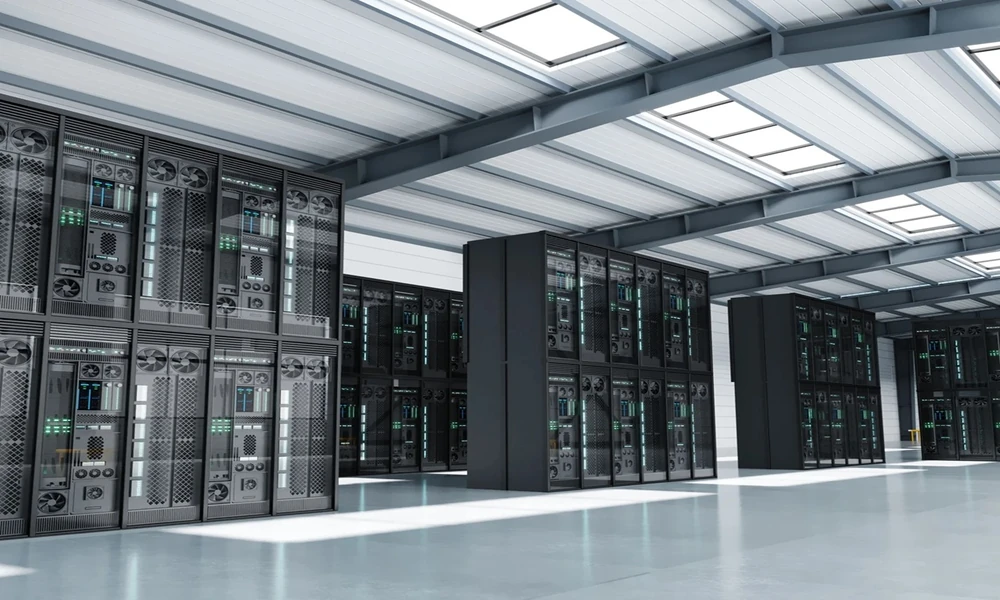
Few asset classes are as unforgiving about location as a data centre. The building itself is largely commodity; what determines whether it succeeds is power, water, connectivity, land and the physical stability of the surroundings over a twenty-year horizon. Get any one badly wrong and the facility is either uneconomic to run or unable to expand. Data center site selection has consequently become a multi-disciplinary exercise rather than a real estate one.
Power Availability and Grid Reliability
Electricity is the binding constraint almost everywhere. The questions are how much capacity the local utility can commit, how long the connection queue is, and whether the grid segment has a history of instability. Lead times for large connections now stretch to several years in many markets, which means a site with land and fibre but no firm power offer is not really a site. Redundancy of supply routes matters as much as headline capacity, since a single feeder is a single point of failure regardless of how much capacity it carries.
Cooling Demand and Rising Temperatures
Cooling is where climate exposure hits the operating model directly. Higher ambient temperatures reduce the efficiency of most cooling systems precisely when load is highest, raising energy consumption and, in extreme cases, forcing thermal throttling. A design sized against historical temperature distributions will be undersized against the distribution the facility actually experiences later in its life. Heat, water and power constraints interact rather than acting independently, so a design that solves one by leaning harder on another has moved the problem rather than removed it.
Water Access and Competition
Many cooling designs consume significant water, and water is increasingly contested. Site evaluation should examine not just current availability but projected stress, the seniority of the facility’s claim relative to agriculture and municipal use, and the regulatory appetite to restrict industrial abstraction during drought. Several markets that looked attractive on power and land have become difficult on water alone. Where water risk is material, air-cooled or closed-loop designs shift the constraint back toward power, which is a trade rather than a solution.
Flood, Storm and Ground Conditions
Physical hazards are the most obvious consideration and still frequently assessed with outdated inputs. Flood maps built on historical rainfall understate current surface water risk in many urban areas, and coastal sites face compounding sea level and storm surge exposure. Ground stability, subsidence and seismic conditions affect foundation cost and long-run integrity. Because hazard exposure varies sharply over short distances, parcel-level analysis is necessary a regional average will not distinguish between two candidate plots on opposite sides of a watercourse. Detailed work on physical climate risk and adaptation for data centres sets out how these exposures compound across a facility’s operating life, and why an assessment run once at acquisition rarely remains accurate for long.
Connectivity and Latency
Fibre availability, route diversity and proximity to interconnection points determine whether the facility can serve its intended market. Route diversity is the detail most often underestimated: several carriers sharing one physical duct provides commercial choice but no physical redundancy. Latency requirements set an outer boundary on distance from the population or systems being served, which constrains how far a developer can move to escape land or power pressure in a core market.
Land, Planning and Expansion Room
Beyond the initial footprint, the site needs space for phased expansion, substation infrastructure, generator yards and fuel storage. Planning treatment varies widely between jurisdictions, and some markets have become actively restrictive about new capacity because of grid and water pressure. Community sentiment increasingly affects timelines. Assessing planning risk and expansion headroom early avoids acquiring a parcel that supports only the first phase of a multi-phase plan.
Local Adaptive Capacity
Two sites facing identical hazard exposure can perform very differently over time. What separates them is the surrounding jurisdiction’s capacity to invest in drainage, grid hardening and emergency response, and its fiscal ability to sustain that investment. This factor rarely appears on traditional site scorecards and often explains why one location remains insurable and financeable while another quietly deteriorates. Incorporating adaptive capacity into the evaluation is what turns a hazard map into a durable view of the location.
Total Cost Over the Asset Life
The temptation is to optimise on land price and construction cost, both of which are visible upfront. The costs that actually determine returns are power tariffs and availability, cooling energy across a warming temperature curve, water charges, insurance premiums as exposure is repriced, and downtime. Modelling these across the full hold period frequently reverses the ranking that initial capital cost suggests, which is the strongest argument for doing the analysis before the land is secured rather than after.
Bringing the Factors Together
No site scores well on everything, so selection is an exercise in weighted trade-offs against a specific brief. What matters is that every factor is assessed on consistent, current data rather than a mix of vendor claims and historical assumptions. Reviewing published climate risk research alongside conventional site criteria helps ensure the environmental inputs are as rigorous as the commercial ones.
Data centres are long-duration, capital-intensive commitments in a market where power and water constraints are tightening. The sites that look best over twenty years are rarely the ones that looked cheapest on day one.
